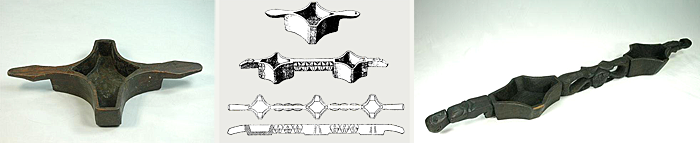
Problems: 1. How to design simple forms for rich interaction? (including movement-centric, social interaction, self-expression, etc.) 2. What's the relationship between movement and form? Can we think "movement" without form? 3. What kind of form is suitable for movement? 4. Echoing "tangible interaction = form + computing" by Mark Baskinger and Mark Gross, if "tangibility = movement + form", how can Tangibility be explored? 5. Affordance: restriction or hint?
Practice: regarding "functionality" of a music player, pick up 8 representative forms on the above siteless sample page for 8 Effort qualities of LMA. Draw 8 sketches based on the above forms and corresponding movements.
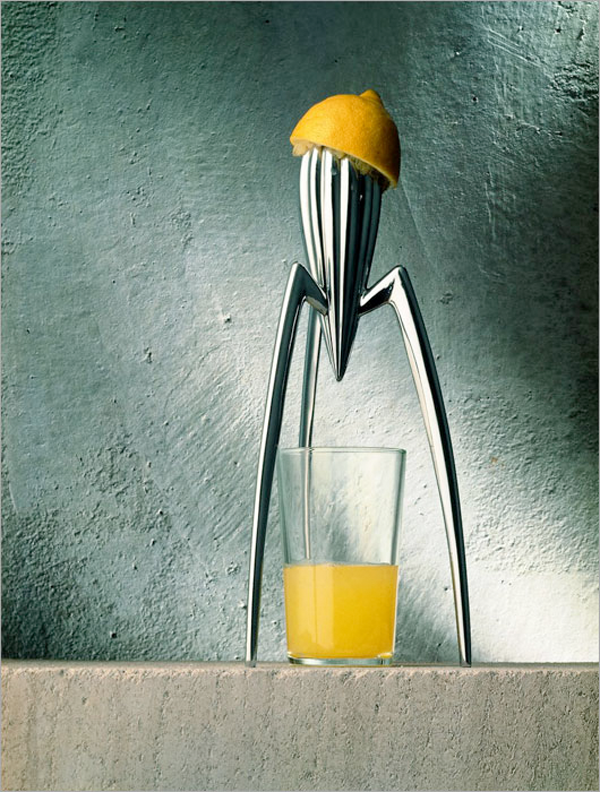
"Re-routed Radio" projects by industrial design students (a) Nadeem Haidary, (b) Josh Finkle, and (c) Gavin Stewart. These music players were designed to establish new forms of interaction using standard electronics combined with non-traditional materials and expressive physical forms.
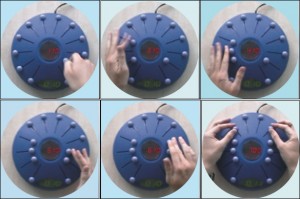
The Hit Me interac
-
tive lighting device responds
to touch with an LED display. It
affords various interactions with
the hand. Designed by Carnegie
Mellon students Henry Julier,
Justin Rheinfrank, Amanda Ip,
and Michael Cruz-Restrepo;
directed by Kees Overbeeke
(TU/e). Image source: www.hen
-
ryjulier.com
1. What is expression? What is designer's expression? What is user's expression?
2. What is interaction?
3. What is tangible interaction? 4. manipulation vs. expression 5. tool vs. material 6. embodied interaction 7. what are the contrasts of movements?
Music, form, and mutual contrast Practice:
1.
2.
3.
4.
5.
6.
7.
8.
9.
Practice in class:
Draw lines to represent the music form in mutual contrasts
TOY Probes:
1. collect at least 3 interesting toys (or products) with expressive tangible quality.
2. bring 1 (or more) toy to the classroom for discussion.
3. make your own toy probes, with analysis of the "movements" in each toy.